A face shape checker is most useful when it helps you describe what you see. You can do that with a mirror, a clear view of your hairline and jaw, and a few comparisons. The result may be a familiar name such as oval or square, or a mixture that fits no neat diagram. Either can help when you try glasses or discuss a haircut, provided you keep the outline separate from any judgement about what you ought to change.
Set up a view you can trust
A bathroom mirror is enough to start, provided you can see the outline clearly. Move loose hair away from the temples and cheeks, take off glasses, and look straight ahead with your chin resting naturally. You do not need to press your hair flat or pull it so tightly that your hairline changes. The aim is to see where your face ends, not to create the neatest possible photograph.
I prefer a plain mirror check before using any face shape checker that asks for a photo. It lets you notice details a crop might hide: a narrow temple, a rounded jaw corner, a chin that looks pointed only when you smile. Use fairly even light. Strong light from one side can make a cheekbone appear more prominent than its partner, while a high light can leave the jaw difficult to read.
If you want a reference photo, move the camera farther away than a close selfie and keep it near face height. Use the same position for later comparisons. Avoid stretching an arm toward the lens and judging the nearest feature. A photograph is useful for holding a view still; it is not an independent verdict. If it disagrees with the mirror, check the setup before changing your conclusion.
Find the broadest area before picking a name
Look across three levels: the forehead around the temples, the cheekbones, and the jaw. Ask which seems widest in a straight-on view. You can hold a ruler in front of the mirror for a rough comparison, keeping it level and away from your eyes. There is no need to make a millimetre measurement here. A clear difference matters more than two readings that almost match.
Separate the cheekbones from the fullest part of the cheeks. The cheekbone level sits higher than the soft area beside the mouth. A smile changes cheek fullness, so return to a relaxed expression before comparing. At the forehead, use the visible side boundaries rather than the widest sweep of your hairstyle. At the jaw, look near the corners below the ears rather than measuring across the chin.
Write one short observation before consulting a diagram: “Cheekbones widest, forehead slightly narrower, jaw narrower again.” That sentence is harder to misuse than a single label. If the forehead and cheekbones look similar, record a tie. Forcing a winner because an online chart expects one turns a small uncertainty into a confident but unhelpful result.
Read the length and jaw together
Compare the visible distance from the central hairline to the bottom of the chin with the broadest part of the face. This is a visual proportion check, not a rule that requires a particular ratio. A face can look clearly longer than wide, fairly compact, or somewhere between. A high or uneven hairline makes this comparison less decisive, so give the overall contour more weight if the starting point is uncertain.
Now follow the jaw from below the ear toward the chin. Does it form an obvious corner, change direction gently, or narrow steadily? A square-looking corner and a pointed chin describe different things. Look at both before choosing a category. Facial hair can hide the natural edge, and a shadow beneath the jaw can suggest a corner that is less clear in even light.
| What you notice | Shape family to compare | What to check next |
|---|---|---|
| Similar widths with a curved jaw | Round or oval | Whether the face looks compact or longer |
| Similar widths with distinct jaw corners | Square or rectangular | Length and how broad the chin appears |
| Forehead broader than a tapering jaw | Heart or inverted triangle | Whether the upper outline stays broad at the temples |
| Cheekbones broader than forehead and jaw | Diamond | Whether the difference remains clear in the mirror |
Use the table to choose diagrams to compare, then return to your own outline. It does not cover every face, and the names are not a standardized measurement system. An oval comparison may explain your length while a heart comparison explains your taper. Both observations can be useful without making either one a perfect answer.
Keep a mixed result instead of retaking everything
A common stopping point is “mostly oval, with a broad forehead” or “square jaw, longer overall outline.” That is a usable result. You have identified two features that might affect a haircut or frame choice. Repeating the check until you obtain a pure category usually adds frustration rather than information. Small differences in chin position or expression can move a borderline result.
Try one second view if something genuinely looks inconsistent. Relax your mouth, level your head, and check the same three widths again. If the broad pattern remains, keep it. If the jaw seems narrow in the photo but broad in the mirror, look for camera distance, rotation, hair, or beard coverage. Do not average incompatible views into a new number and treat it as precise.
You can save a short note with the photo: widest at cheekbones; moderate length; soft jaw; uncertain hairline. It will be more useful in a shop than a screenshot showing an unexplained percentage. A tool that assigns several shape scores may be describing similarities within its own categories. Unless its method is explained, those scores do not tell you how accurately it measures your face.
Use the observation for one practical choice
Choose an actual decision before looking for recommendations. For glasses, begin with frames that sit comfortably at the bridge, stay steady when you look down, and do not press into your cheeks. Then compare two shapes while keeping size and colour reasonably similar. If you like an angular frame against a soft jaw, keep it as an option; if you enjoy a rounded frame repeating that softness, that works too. The checker has given you a way to describe the effect.
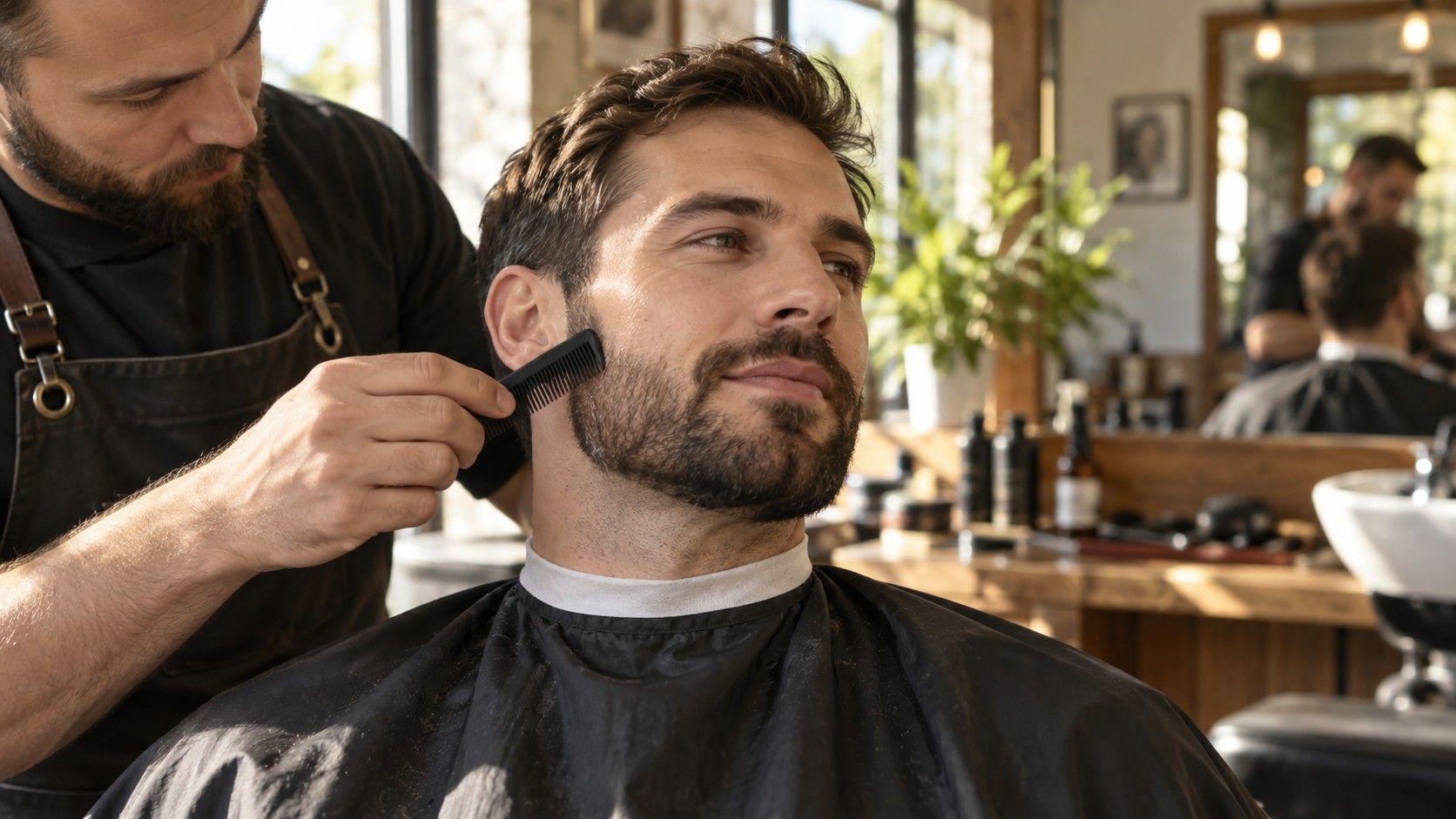
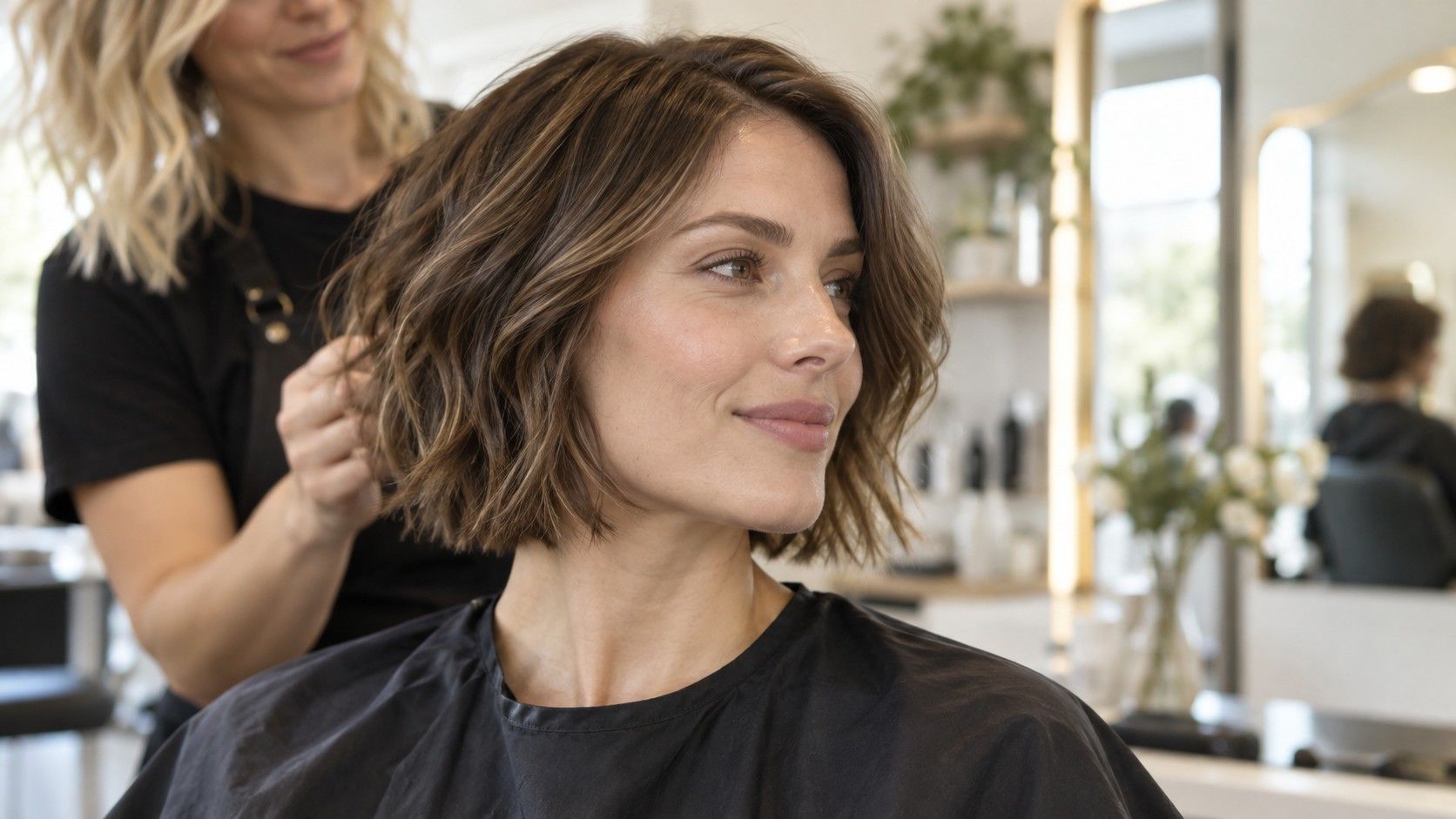
For hair, take the outline note to the salon along with a reference showing texture similar to yours. “I want less width around my temples” is a clearer request than “give me the best haircut for a heart face.” Consider the part, fringe, side volume, and how the cut will behave when you style it yourself. Hair density, curl pattern, maintenance time, and personal taste can change the decision more than the category does.
Use accessories in the same experimental way. Hold a pair of earrings near your face or try a hat in the mirror, then decide whether you like the extra width, length, or repetition it creates. There is no obligation to make every feature look different. The most useful result from a face shape checker is a few observations you can test in real life, followed by permission to keep what feels comfortable and looks right to you.
When comparing options, change one thing at a time. Try two frame outlines in a similar size, or compare a centre part with a side part while keeping the rest of your hair in place. Otherwise a darker colour, extra volume, and a new angle can all affect the impression at once. Give yourself a front view and a side view before deciding. A shape that looks striking in a still photograph may feel awkward during an ordinary day, and that everyday experience deserves a place in the decision.