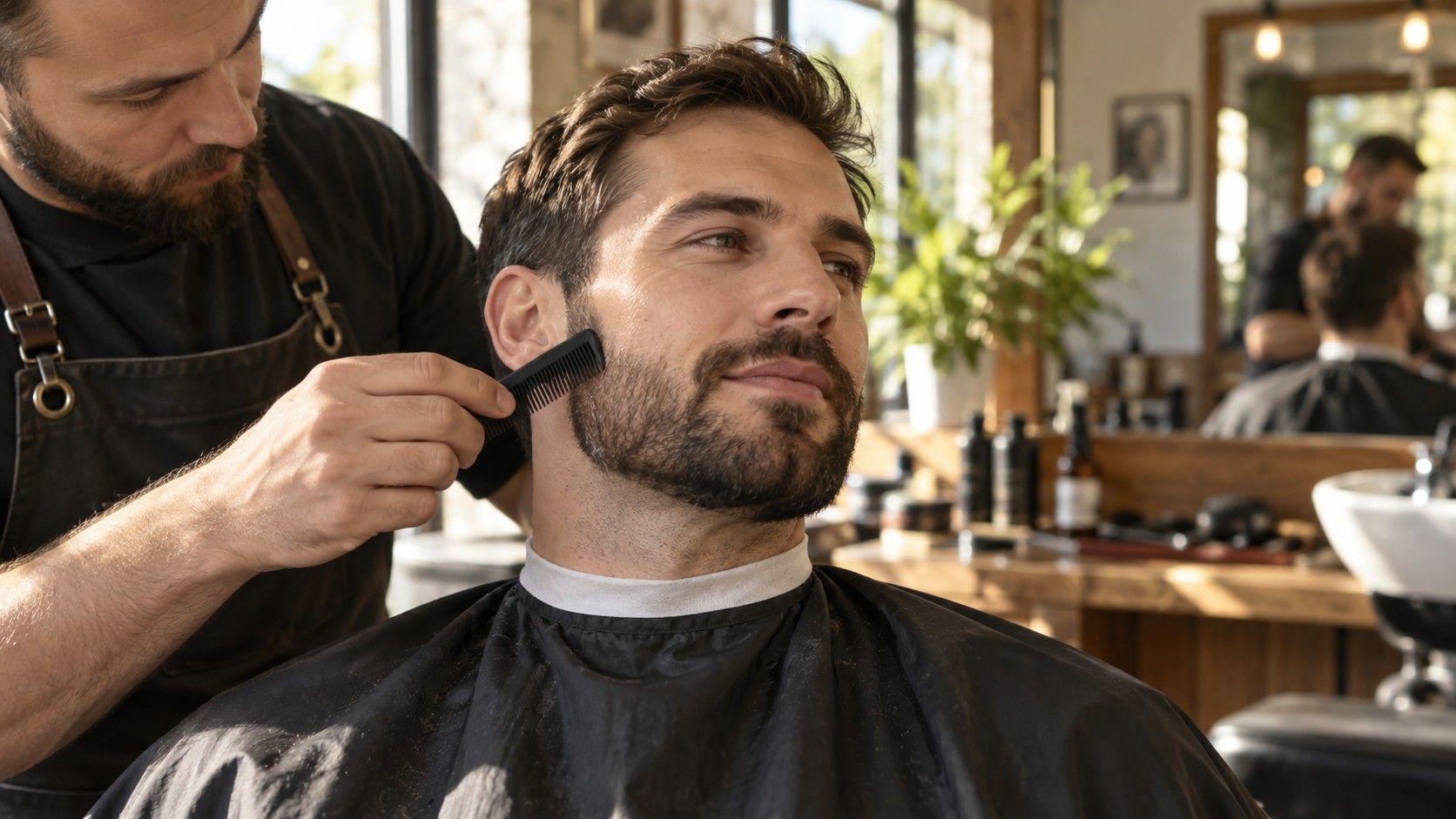
A beard changes the visible outline around your cheeks, jaw and chin. That makes beard styles for face shape a useful starting point, provided the advice allows for the growth you actually have. Side bulk, chin length and the cheek line can each change the impression, but copying a dense reference beard onto a different growth pattern often leads to repeated trimming without a clear result. Start with a dry, settled beard in ordinary light. Decide what you want to emphasise, then adjust one part of the outline at a time.
Map the growth you have before choosing the outline
Brush or comb your beard gently into the position you normally wear it, then let it settle. Check the cheeks, moustache connections, under-chin area and sides separately. Growth density may vary, and the two sides may not match exactly. Those observations help you select a believable shape; they do not tell you anything reliable about personality, health or masculinity. A beard can look intentional without forming a solid block of hair everywhere.
Look in soft front light as well as your bathroom lighting. Strong light directly above the mirror can create shadows that make some areas seem denser and others patchier. Take a neutral front photograph and a side view if that helps you compare later. Keep the camera position consistent. A close low-angle image exaggerates the under-chin area and is a poor basis for deciding how much length to remove.
Choose references with similar growth distribution when possible. A short boxed beard with dense high cheeks is a different project from a lower cheek line with more growth around the chin. You can borrow a general idea, such as a softer jaw corner, without recreating every boundary. If you are growing into a new length, give the hair enough time to show its direction before repeatedly changing the plan. The exact timing varies with your own growth and desired style.
Compare chin length with bulk at the sides
Stand straight and look at the outer silhouette. More length under the chin can create a longer lower outline, while fullness at the sides can make the jaw area appear broader. These effects depend on texture and direction: tightly curled hair may add bulk before it adds much visible length. Decide whether your goal is a neater version of the current outline, a narrower side profile or a more substantial jaw frame.
If you want less width, try reducing side bulk gradually while protecting the chin length you intend to keep. If you want a shorter-looking outline, compare removing some length below the chin while retaining comfortable side fullness. Neither approach is compulsory for a round, long or angular face. A long face can wear a long beard because its owner likes it. The label gives you a way to predict an effect, not a rule you must obey.
Use a guard you know and start longer than you think you need. Guard numbers are not universal across devices, and cutting with or against the growth can produce different results. Follow the trimmer's instructions and test cautiously in a less conspicuous area. Brush the hair back into place after a small pass before removing more. Trimming repeatedly while holding the hair stretched can leave the settled beard shorter than you intended.
Set a cheek line that follows believable growth
The cheek line is the upper border of the beard, and it can make a small trim look quite different. Before shaping it, identify the main area of connected growth and the few isolated hairs above it. Removing scattered hairs may be enough for the tidier finish you want. Drawing a very low line at the outset removes options and can make you keep lowering the other side to chase symmetry.
A straighter cheek line can look more defined; a gentle curve may follow the natural growth more closely. Compare the effect with a photograph or a temporary visual guide before shaving a large area. Keep your face relaxed while assessing it. Stretching the skin changes where the edge appears, so return to a neutral expression before deciding the line is even. Treat small side-to-side differences as normal rather than trimming endlessly for a mirror image.
Check how the line meets the sideburn and moustache. An abrupt corner may be what you want, but it should be a deliberate choice rather than the leftover edge of several separate trims. If the connection is sparse, a softer boundary can be easier to maintain than a sharply drawn line that exposes every gap. Ask a barber to show the intended border before cutting when you are uncertain about where the natural growth should end.
Review the neckline with your head in a normal position
The neckline is easy to misjudge while leaning toward a mirror with your chin lifted. That position exposes skin you rarely see from straight ahead and may tempt you to move the line too high. Check the beard with your head level first, then turn sideways and use a second mirror. You are looking for a lower boundary that supports the beard's overall outline when you stand and move normally.
There is no single finger-width measurement that works for every neck, jaw and beard length. A short beard may have a visible groomed neckline, while a longer beard can cover much of the boundary. Consider the side profile and the transition beneath the jaw, rather than placing a line solely from a popular landmark rule. If unsure, leave more growth and have the position assessed in person before shaving away the support for the shape.
Work in good light with a clean tool and avoid repeated passes over irritated skin. If the area feels sore, stop grooming it rather than trying to perfect the boundary immediately. A minor outline difference is less troublesome than continuing a trim on uncomfortable skin. For an established long beard, lifting the hair to shave underneath also requires care: keep the lengths you want clear of the cutting edge and do not assume every hidden strand should go.
Change one section and inspect the whole beard again
Start with a specific task, such as clearing isolated cheek hairs or reducing a little side bulk. Complete that small adjustment, then step back from the mirror. A close inspection makes individual hairs look more important than they are at conversation distance. Compare the front, profile and three-quarter view before moving to another section. The transitions between areas matter as much as the neatness of each separate edge.
Trim when the beard is in a state you can reproduce. Wet or heavily styled hair can sit differently from a dry, lightly combed beard. If you usually use a product, understand whether it is holding the shape you are measuring or simply softening the hair. After the trim, check it with your ordinary routine. A silhouette that works only with extra time and a stiff finish may not fit your morning habits.
Keep a note of the tool setting, direction and areas changed if you plan to maintain the shape yourself. This is more useful than remembering that you used a particular guard somewhere. Do not assume the same setting will produce identical bulk across cheeks and chin, where growth direction and density differ. Take the next trim from the result you can see, using the notes as a starting reference.
Give a barber a practical request you can maintain
Explain the effect in plain terms: less width beside the jaw, some length retained at the chin, a natural cheek line or a neckline that looks tidy with your usual collar. Bring the glasses you wear and show your normal hairstyle if they form part of the overall look you care about. A face-shape name can help open the discussion, but the visible areas you want changed are more precise.
Ask which details will need frequent attention and which can grow more softly between appointments. A crisp boundary may look good on the day yet demand more maintenance than you want. Leave with a clear understanding of what you will trim at home and what you prefer the barber to handle. Your beard does not need to produce a different face category. A comfortable outline that works with your growth, tools and daily routine is a worthwhile result on its own.