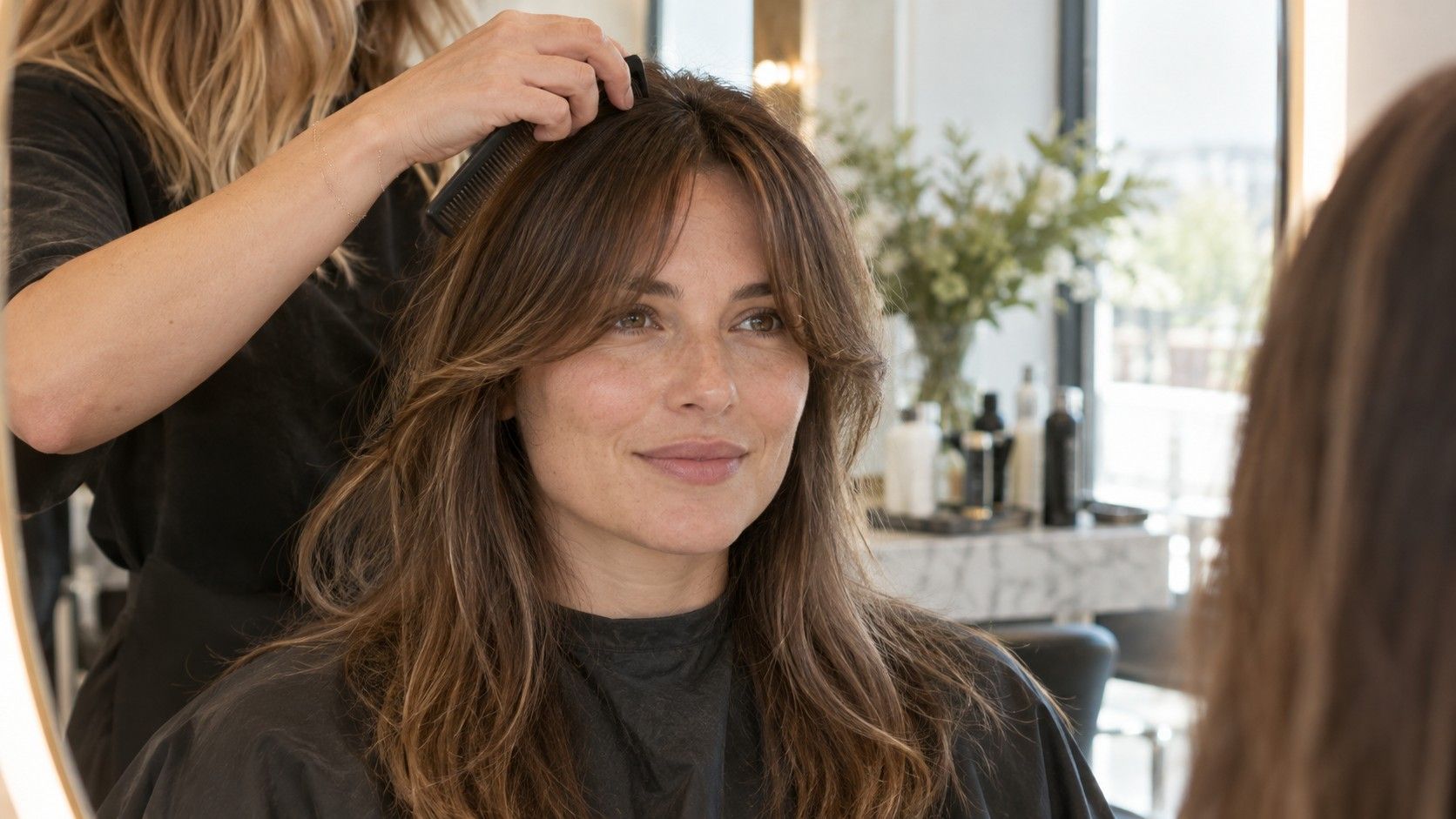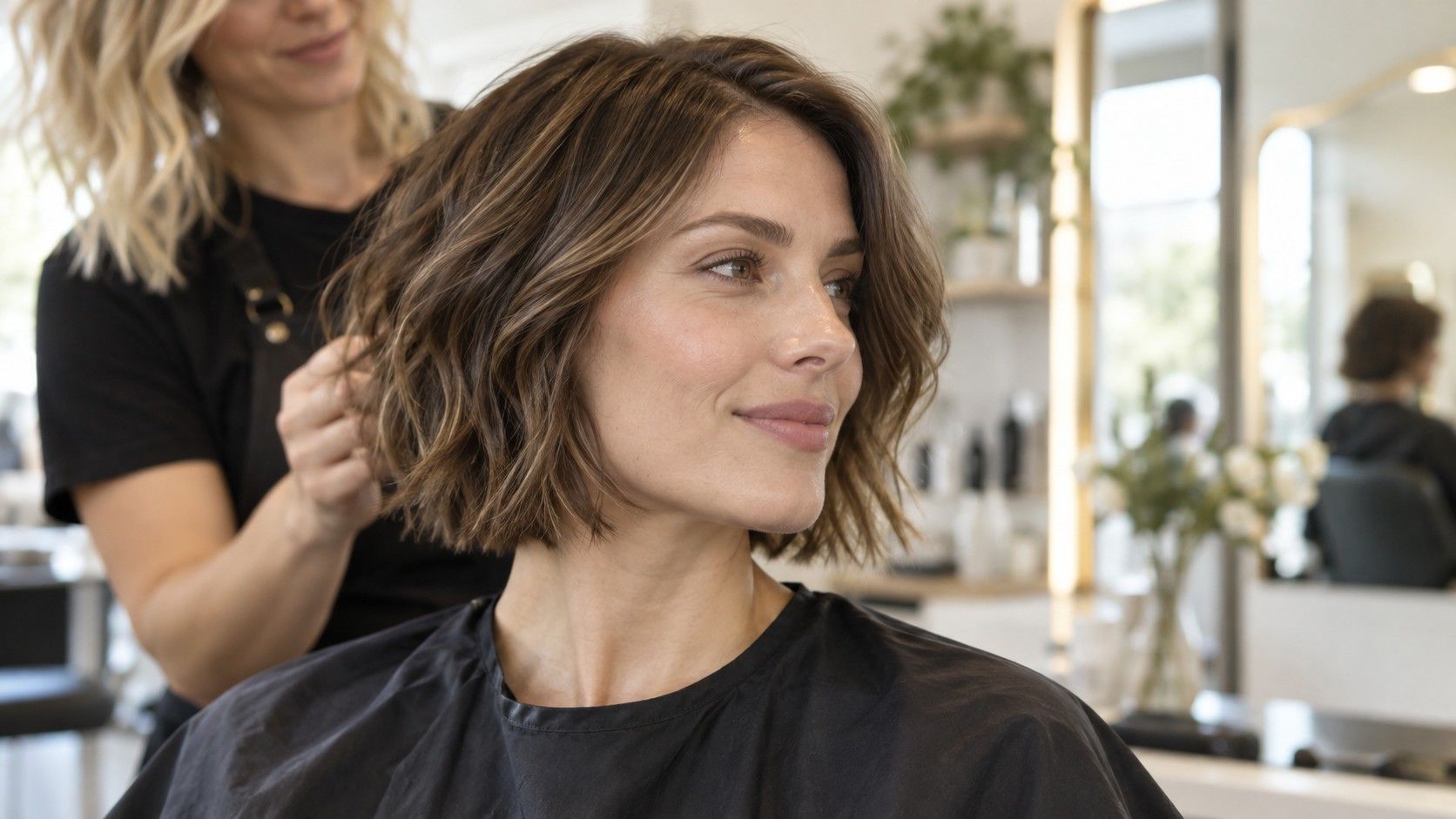
The end of a bob creates a visible line beside your face, but deciding where that line should sit takes more than a face-shape label. A chin-length cut on fine straight hair behaves differently from the same apparent length on dense waves. When considering advice about bob haircuts for your face shape, I would use the jaw as a reference, then check texture, the back of the cut and your normal styling routine. You are choosing a length you will live with on ordinary mornings, including the days when you let your hair dry without persuading every strand into place.
Find the line you actually want to emphasise
Stand in front of a mirror with your hair dry and arranged as you usually wear it. Find your chin, the corners of your jaw and the space between the jaw and shoulders. These give you landmarks for discussing length. A bob ending beside the jaw places its edge in the same area; a longer front section carries that edge lower. Neither effect is automatically better. Decide whether you enjoy a clear line next to the jaw or prefer some hair extending beyond it.
Fold longer hair under loosely to preview several positions. Start near the chin, then move the folded edge a little below the jaw. Use clips at the back if needed, keeping them out of the visible outline. This is a rough silhouette test: folded long hair is thicker than a fresh cut and will not reproduce its movement. It can still reveal that you prefer your ears exposed, a longer front piece or a softer edge beside your cheeks.
Take a front-view photograph with the camera at eye level, then check the mirror again. Avoid choosing a length entirely from a close selfie, which can change the apparent balance between your face and hair. Wear a familiar neckline for the comparison. A scarf or high collar can conceal the lower edge and make two lengths look more similar than they will with an open collar.
Compare the jaw, the space below it and the collarbone
A jaw-length bob tends to make the haircut's outline easy to see. On straight hair with a blunt perimeter, that line can be quite distinct. On waves or curls, the edge may appear softer and less level from strand to strand. Ask whether the front will meet the chin when dry, sit below it or angle toward it from a shorter back. “Chin length” alone leaves room for different interpretations.
A length below the jaw gives the front pieces more distance before their ends. It may let you tuck them behind your ears more easily, although that depends on the starting point and your features. A collarbone-length version offers a longer outline and sometimes more options for tying part of the hair back. Check this physically before relying on it: the layers at the front and nape may still escape a small ponytail.
| Length to discuss | What to compare in the mirror | A practical question for the salon |
|---|---|---|
| Near the jaw | The haircut edge beside the jaw corners and chin | Where will the front sit after drying? |
| Below the jaw | The space between the ends and the shoulders | Will the front tuck comfortably behind the ears? |
| Near the collarbone | How the ends sit against clothing and shoulders | Which sections will still fit into my usual tie-back? |
Shoulder contact matters. Hair at an in-between length may turn outward where it rests against your shoulders or a coat collar. That movement can be attractive if you like a relaxed finish; it can be frustrating if your reference photograph shows an inward curve. Show the stylist how you normally dress and wear the hair, rather than assuming a slightly longer bob will require less styling in every case.
Let curl shrinkage and density change the plan
With curly or wavy hair, discuss the finished dry length instead of judging the cut only while it is wet or stretched. The difference varies across heads and even across sections of the same head. There is no single allowance that suits every curl pattern. Bring your hair in its normal state if the salon requests it, and explain which pieces spring up most strongly or look shorter after a wash.
Ask how the stylist plans to assess shrinkage during the appointment. A dry check can help confirm where the front and perimeter sit, particularly if the reference style has a firm line near the jaw. Keep some flexibility about the exact finish: humidity, drying technique and product can change how waves group together. A cut should still make sense when the curl arrangement is a little different the next day.
Density affects the silhouette as well as length. Dense hair can create width near the ends, while fine hair may appear lighter through the perimeter. Layers or internal weight removal can alter that behaviour, but the right approach depends on texture and the desired edge. Ask what a proposed technique will do to your particular hair. Removing weight simply because a chart says your face needs less width is too vague a reason for an irreversible cut.
Check the profile, the nape and the view with glasses
A bob is a three-dimensional cut. The front may look exactly right while the back feels shorter than you expected, particularly with an angled shape. Use the salon's second mirror to see the nape and profile. Ask how much of the neck will show and where the back will meet your natural hairline. Growth patterns at the nape can influence how a short edge lies, so point out any section that habitually kicks up.
Turn your head and tuck the hair behind an ear during the consultation. Notice what happens to the side pieces and whether a fringe separates around the arms of your glasses. If you wear glasses every day, bring them. The frame can lift or redirect short sections, and a cut that works with hair falling forward may feel different when you need it off your face for work.
Consider your preferred part at the same time. Moving from a side part to a centre part redistributes the hair and can change the apparent length of the front. It may also expose a cowlick that was hidden before. If a reference photograph depends on a part you rarely use, ask to see the proposed shape with your usual one. You should understand which details are built into the cut and which come from styling for the photograph.
Bring a maintenance description alongside the reference picture
Tell the stylist what happens after washing: air-drying, a quick dryer pass, a round brush or regular heat styling. Include how often you wash and whether you need to tie the hair back for exercise or work. These details make the length discussion concrete. “Low maintenance” can mean five minutes of daily styling to one person and leaving wet hair untouched to another.
Choose reference pictures for specific features. One might show the front length you want, another the softer perimeter, and a third the amount of neck you are comfortable revealing. Explain which parts matter instead of asking for an exact copy. The model's hair density, texture and styling may differ from yours, and a similar face shape does not remove those differences.
Discuss how the shape will grow out and what would prompt a return visit. A very precise perimeter may need attention sooner than a cut where softness is part of the look, but there is no fixed appointment interval for every bob. Budget, growth rate and tolerance for changing length all matter. Ask for a realistic plan based on your hair, including what you can do when the front starts to feel awkward.
Choose a starting length with room for your preferences
If you are unsure about a substantial change, discuss whether starting slightly longer makes sense. You can then assess the outline and go shorter later; restoring removed length takes time. This does not mean every bob should begin at the collarbone. It means the amount you cut should match how certain you are about the specific result, especially if your preview used pinned-up hair rather than a similar previous cut.
Before the appointment ends, look at the dry cut from the front and side, put on your glasses and try your normal tuck. Confirm the simple styling steps you intend to use at home. The useful answer to “where should my bob end?” is a visible landmark and a workable routine: just below the jaw with natural waves, perhaps, or a clear chin-length edge with a quick blow-dry. A shape label can start the conversation, but the final length belongs to your hair and your preferences.